The Timeless Beauty of German Stained Glass
- Franz Brendle
- Feb 28
- 3 min read

Updated: Mar 1
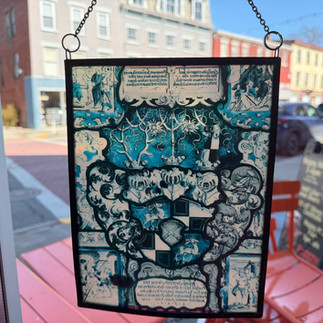
Guten Tag from Fränzel in Goshen! A cozy spot dedicated to authentic German cuisine and culture, I'm Franz Brendle, in this post I'd like to share a bit of German heritage that brightens our space every day. If you've visited us at 47 West Main Street, you've likely noticed the colorful play of light dancing through our storefront windows. That's thanks to our collection of German stained glass suncatchers, hanging there like little jewels from the Old World. These pieces aren't just decor—they're a nod to centuries of craftsmanship that originated in Germany. Today, I'll dive into their fascinating history, the intricate process of creating them, and why they're a beloved part of our restaurant.

A Glimpse into History: From Medieval Cathedrals to Modern Windows
Stained glass has deep roots in German history, dating back to the medieval era when it transformed churches into glowing sanctuaries of color and light. The art form reached its peak in Europe between 1150 and 1500, with Germany playing a pivotal role. The oldest surviving stained glass windows still in their original place are the Prophet Windows in Augsburg Cathedral, Bavaria, created around the late 11th to early 12th century. These depict biblical figures like Moses and Jonah, showcasing early techniques that blended artistry with spirituality.
Much of what we know about medieval stained glass making comes from a 12th-century German monk named Theophilus, who detailed the process in his treatise "On Diverse Arts"
. During the Gothic period, grand cathedrals like Cologne's featured towering stained glass panels that told stories from the Bible to illiterate congregations. Monks in monasteries began experimenting with painting on glass as early as 750 AD, evolving into the vibrant windows we associate with German architecture today.
While large-scale windows adorned churches, smaller suncatchers emerged as a way to bring this beauty into homes. These portable pieces, often depicting nature, folklore, or simple motifs, became popular in German households during the Renaissance and beyond. They carried the legacy of those early masters, turning everyday sunlight into a spectrum of colors.


The Crafting Process: Heat, Precision, and Artistry of German Stained Glass
Creating a stained glass suncatcher is a labor of love, blending ancient techniques with skilled hands. There are two primary methods: the traditional lead came approach and the more modern Tiffany method using copper foil. Let's walk through the steps, focusing on the traditional style that's so tied to German roots.
First, the artist designs a pattern and selects colored glass sheets—often hand-blown for that authentic, textured look. The glass is scored with a cutter along the pattern lines and snapped into pieces using pliers or running pliers for curves. Edges are then ground smooth with a grinder or file to ensure a perfect fit.
For detailed designs, enamel paints are applied to the glass. This is where the "heating" comes in: the painted pieces are fired in a kiln at high temperatures (around 1,200–1,400°F) to fuse the pigments permanently to the glass surface. This firing process, described by Theophilus centuries ago, gives the colors their depth and durability.
Next, the pieces are assembled. In the lead came method, H-shaped lead strips (called cames) wrap around each glass edge, and the joints are soldered together with a hot iron and flux. For the Tiffany style, self-adhesive copper foil tapes the edges, followed by soldering for a finer, more intricate finish. Finally, the suncatcher is cleaned, patinated (often blackened for contrast), and fitted with a chain or hook for hanging.
The result? A shimmering ornament that catches the sun's rays, casting rainbows across the room. It's a process that demands patience—each piece can take hours or days—but the magic it creates is worth every moment.

Seeing the Magic at Franzel
At Franzel, we celebrate all things German, from our scratch-made goulash and schnitzel to the cultural touches that make our space feel like a slice of The Father land. Our storefront windows are adorned with a variety of these stained glass suncatchers. They hang there, twinkling in the Goshen sunlight, adding a warm, inviting glow to our dining area. They're a reminder of Germany's rich artistic legacy right here in the Hudson Valley.
If this has sparked your interest, come visit us in Goshen! Prost to history, craftsmanship, and a bit of colorful light in your day. We'd love to hear your thoughts—drop by or follow us on Instagram @franzelrestaurant.





Bis bald,
Franz Brendle


Comments